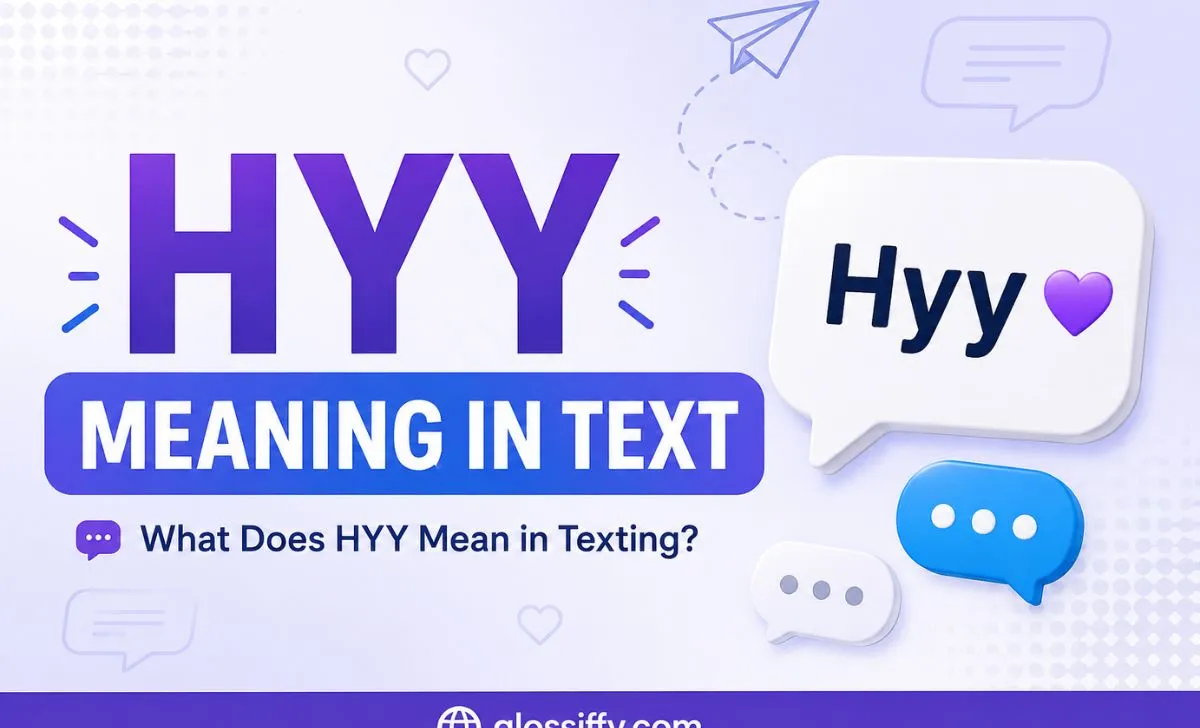
Seeing “hyy” in a text can make you wonder whether it is a typo, an abbreviation, or a slang term. In most casual conversations, the answer is simple: hyy is a stylized way to say “hi” or “hey.” The extra “y” usually adds a warmer, friendlier, or more playful feel.
People use it to start conversations, get someone’s attention, or make a simple greeting sound less plain. Its exact tone depends on the person, context, and the rest of the message.
Quick Answer

HYY usually means “hi” or “hey” in text. It is a casual, stylized greeting used to start a conversation or get someone’s attention.
The extra “y” can make the message feel friendlier, softer, or more playful than a plain “hi.” It does not normally have a separate official full form.
Key Takeaways
- HYY usually means “hi” or “hey.”
- It is an informal texting expression, not normally a fixed acronym.
- The extra “y” can make the greeting feel warmer or more playful.
- It can sometimes sound flirty, but hyy is not automatically flirty.
- It is best suited to casual texts, chats, and social media.
What Does HYY Mean in Text?
The most common hyy meaning in text is simply “hi” or “hey.”
Unlike texting abbreviations such as “LOL” or “BRB,” hyy is usually not an acronym with a fixed full form. It is better understood as expressive spelling.
People change the normal spelling of a greeting to make their message feel more relaxed or personal.
For example:
Hyy, what are you doing?
This normally means:
Hey, what are you doing?
The extra letter does not create a new dictionary meaning. Instead, it changes the style and tone of the greeting.
Why Do People Type HYY Instead of Hi?
There is no strict rule behind the extra y. In casual texting, people often stretch words or add letters to show emotion.
Someone may type hyy because it feels:
- More friendly
- More casual
- More playful
- Less dry
- More expressive
- Slightly more attention-grabbing
Compare these messages:
| Text | Usual feeling |
| Hi | Neutral |
| Hey | Friendly and casual |
| Hyy | Friendly, relaxed, or playful |
| Hiii | Warm or excited |
| Heyy | Soft, friendly, sometimes flirty |
| Hyyy | More expressive or enthusiastic |
These differences are not fixed rules. The relationship between the people and the rest of the conversation matter more than the spelling alone.
How People Actually Use HYY in Texts
Hyy is mainly used as a conversation opener.
A person might send it when they want to:
- Say hello
- Start a casual conversation
- Check whether someone is available
- Get someone’s attention
- Make a greeting sound warmer
For example:
“Hyy, are you free?”
Here, the sender is simply saying hello before asking a question.
Another example is:
“Hyy! Long time no talk.”
The spelling gives the greeting a relaxed and friendly feel.
Real Texting Examples of HYY
With a Friend
Friend: “Hyy, what’s up?”
You: “Not much! How about you?”
Here, hyy is simply a casual “hey.”
Starting a Conversation
“Hyy, how was your day?”
The sender is opening a conversation in a friendly way.
Getting Someone’s Attention
“Hyy, are you there?”
In this context, the greeting is being used to get a response.
In a Group Chat
“Hyy everyone!”
This is an informal way to greet the group.
On a Dating App
“Hyy, I liked your profile ”
Here, the greeting may feel slightly playful or interested. However, hyy by itself does not prove that someone is flirting.
Is HYY Flirty?
Sometimes, but not always.
The word itself is not inherently romantic or flirty. A friend, classmate, online contact, or romantic interest can all use hyy.
Context gives the message its meaning.
For example:
“Hyy, how are you?”
→ Usually just friendly.
“Hyy what are you doing tonight?”
→ Could feel warmer or slightly flirty depending on the relationship.
“Hyy ”
→ The emoji may make the message feel more suggestive or playful.
So, do not assume romantic interest from hyy alone.
What Tone Does HYY Have?
The tone of hyy is usually casual and friendly. It can also feel playful or warm.
The tone may change because of:
- Emojis
- Punctuation
- The words that follow
- The relationship between the people
- The timing of the message
- The previous conversation
For example, “hyy ” and “hyy, we need to talk” clearly create different feelings even though the greeting is the same.
HYY vs Hi vs Hey
| Term | Meaning | Typical Tone |
| Hi | Hello | Neutral |
| Hey | Hello | Friendly |
| Hyy | Hi/Hey | Casual and playful |
| Hiii | Hi | Warm or excited |
| Heyy | Hey | Soft, friendly, sometimes flirty |
The main difference is style, not basic meaning. All of these can work as greetings, but the repeated letters can add a little emotional flavor.
How to Reply When Someone Sends HYY
Your reply can match the sender’s tone.
Simple:
“Hey!”
Friendly:
“Hyy! How are you?”
Casual:
“Heyy, what’s up?”
Playful:
“Hyy What are you doing?”
If you are unsure what they want:
“Hey! What’s going on?”
You do not need a special response just because someone wrote hyy.
Where Is HYY Used?
You may see hyy in informal digital communication, including text messages, social media chats, direct messages, and online conversations. Its basic meaning usually stays the same across platforms: it is a casual greeting.
The platform does not normally give hyy a completely different definition. The surrounding conversation is more important.
When Should You Use HYY — and When Should You Avoid It?
Hyy works well in:
- Casual texts
- Friends’ conversations
- Group chats
- Social media DMs
- Casual online conversations
- Dating or friendly chats
Avoid it in:
- Formal emails
- Academic writing
- Job applications
- Professional messages
- Official documents
For formal communication, use Hello, Hi, or another appropriate greeting.
Common Mistakes With HYY
One common mistake is assuming that hyy is a secret acronym with a fixed full form. In ordinary texting, it is generally just a stylized greeting rather than an acronym.
Another mistake is assuming that hyy always means flirting. It can be friendly, playful, or simply casual. The relationship and context provide better clues.
You should also avoid treating the spelling as formal English. Hyy belongs to informal texting style.
Is HYY Still Used in 2026?
Yes, hyy continues to appear in informal online communication and texting in 2026. Recent usage references describe it as a casual variation of “hi” or “hey,” especially in chats and social media.
However, it is informal. Its use can vary from person to person, so it is better to understand it from context rather than treat it as a formal English term.
FAQs
What does HYY mean in text?
HYY usually means “hi” or “hey.” It is an informal and expressive way to greet someone.
Is HYY an acronym?
Usually, no. In ordinary texting, hyy is a stylized spelling rather than an acronym with a standard full form.
Is HYY rude?
No. Hyy is normally friendly or casual. Its tone can change depending on the conversation.
Is HYY flirty?
It can be used in a flirty conversation, but hyy alone does not mean someone is flirting. Context matters.
How should I reply to HYY?
A simple “Hey!”, “Hyy! How are you?”, or “Heyy, what’s up?” is usually enough.
What is the difference between HYY and HI?
Both can mean a greeting. Hi is neutral, while hyy is more informal and may feel warmer or more playful.
Key Takeaway
HYY means “hi” or “hey” in most text conversations. It is a casual spelling used to make a greeting feel friendly, relaxed, or expressive.
The extra “y” does not usually create a separate meaning. While hyy can appear in flirty conversations, it is not automatically romantic.
Look at the surrounding words, emojis, and relationship to understand the sender’s real tone.
Related Articles
- WYS Mean in Text: Meaning, Uses & Examples
- What Does IH Mean in Text? Meaning, Examples & How to Reply

Hi, I am Sajjad Haider, an experienced English teacher with over 10 years of experience teaching English at the high school level. I help students understand English grammar, vocabulary, word meanings, slang, and everyday communication in a simple and practical way.
At Glossiffy.com, I share clear and easy-to-understand explanations of English words, phrases, and meanings to help students, English learners, and everyday readers improve their English with confidence.