When someone sends “ASL” in a text, the meaning may not be obvious. Unlike many texting abbreviations, ASL can mean different things depending on the conversation.
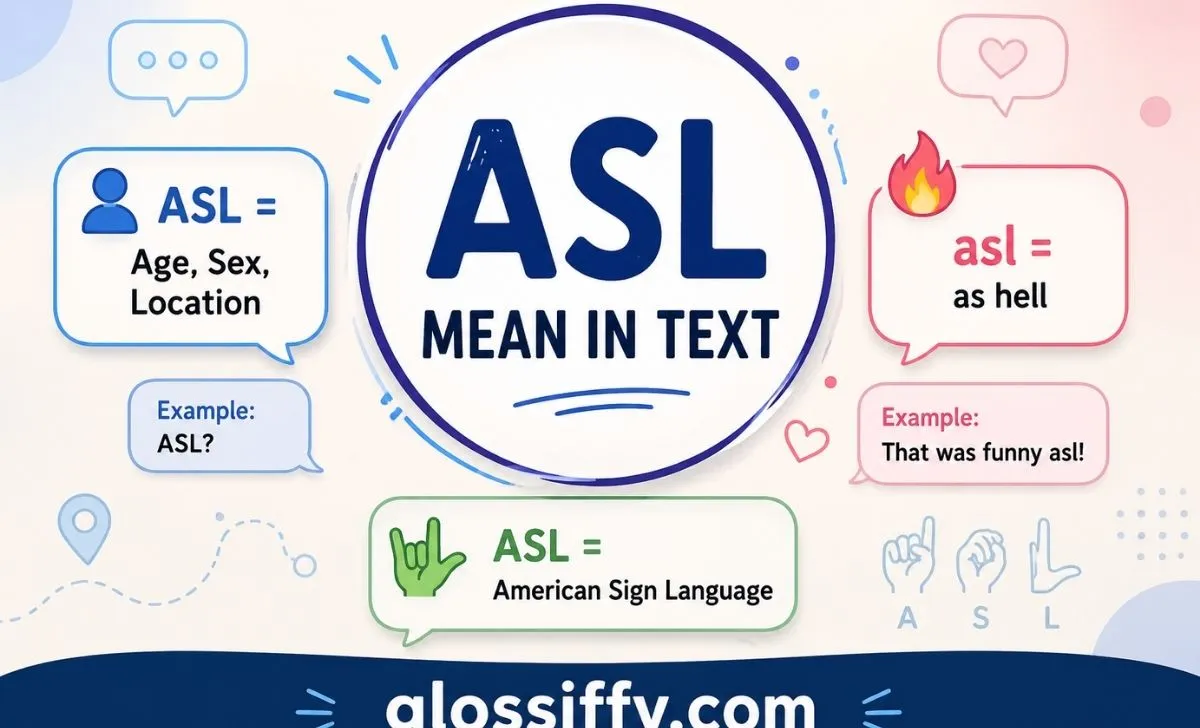
In older online chats, it was often used to ask about a person’s age, sex, and location. In newer internet slang, lowercase “asl” can also mean “as hell,” usually to add emphasis.
ASL can even refer to American Sign Language outside texting slang. So, the right meaning depends on the words around it. This guide explains the common meanings, real examples, tone, and natural ways to reply.
Quick Answer

ASL usually has more than one meaning in text. In older chat conversations, it means “age, sex, location,” asking someone for basic personal details.
In newer slang, “asl” can mean “as hell,” such as “tired asl,” meaning “very tired.” The surrounding sentence usually tells you which meaning is intended.
Key Takeaways
- ASL can mean “age, sex, location” in older online chat language.
- Lowercase asl can also mean “as hell” in modern internet slang.
- ASL may also mean American Sign Language.
- Context is the best way to identify the intended meaning.
- “ASL” can feel casual and should usually be avoided in formal writing.
What Does ASL Mean in Text?
The meaning of ASL in text depends on context.
The traditional texting meaning is “age, sex, location.” It was commonly used in online chatrooms when people wanted to quickly ask someone their age, gender, and where they lived.
For example:
“Hey, asl?”
This could mean:
“How old are you, what is your gender, and where are you from?”
However, modern internet slang has given asl another meaning: “as hell.”
For example:
“That movie was funny asl.”
Here, “asl” means “as hell” and adds strong emphasis. The sentence means the movie was very funny.
ASL can also stand for American Sign Language, but that is usually a language reference rather than texting slang.
Where Does ASL Come From?
The “age, sex, location” meaning became popular in early internet chatrooms and instant messaging. It was a quick way for strangers to exchange basic information.
As online communication changed, the abbreviation became less common for that purpose. Today, you may still see it in older chat contexts, but younger internet users can use lowercase asl to mean “as hell.”
The exact origin of the slang use of “asl” for “as hell” is less clear, so it is better not to assign it to one specific person or platform.
How People Actually Use ASL in Texts
There are two main slang uses to watch for.
1. Asking for personal details
“ASL?” can be a short question asking for someone’s age, sex, and location.
2. Adding emphasis
In modern casual slang, “asl” can act like “very” or “extremely.”
For example:
“I’m tired asl.”
This means:
“I’m extremely tired.”
The second use often appears after an adjective or feeling.
Real Texting Examples of ASL
Example 1: Old Chat Meaning
Person A: “Hey, ASL?”
Person B: “18, male, Texas.”
Here, ASL means age, sex, location.
Example 2: Modern Slang
Person A: “That test was hard asl.”
Person B: “For real ”
Here, “asl” means “as hell” and emphasizes how hard the test was.
Example 3: Casual Conversation
“I’m hungry asl right now.”
The person means they are very hungry.
Example 4: Social Media
“This picture is cute asl.”
Here, “asl” means “as hell,” adding emphasis to “cute.”
Example 5: Language Context
“She teaches ASL at school.”
In this sentence, ASL means American Sign Language, not a texting abbreviation.
Does ASL Have Other Meanings?
Yes. ASL has several meanings, and context matters.
| Meaning | Context | Example |
| Age, Sex, Location | Old online chats | “ASL?” |
| As hell | Modern internet slang | “Funny asl” |
| American Sign Language | Language/education | “I am learning ASL.” |
The words around ASL usually make the meaning clear.
If someone writes “tired asl,” they almost certainly mean “tired as hell.” If someone asks “ASL?” in an old-style chat, they may be asking for age, sex, and location.
What Tone Does ASL Have?
The tone depends on which meaning is being used.
When asl means “as hell,” it is usually:
- Casual
- Informal
- Emphatic
- Common in internet-style communication
It can sound playful or blunt depending on the sentence.
The “age, sex, location” meaning is also very informal. Because it asks for personal information, it may feel direct or intrusive when used with someone you do not know.
ASL meaning American Sign Language is different. It is a standard name for a language and is not slang.
How to Reply When Someone Sends “ASL”
Your reply should match the context.
If someone says:
“ASL?”
and they mean age, sex, and location, you can answer if you are comfortable sharing:
“20, female, Lahore.”
You can also avoid sharing personal details:
“Why do you ask?”
If someone uses asl to mean “as hell,” you do not need to respond to the abbreviation itself. Just reply naturally.
For example:
Them: “That game was fun asl.”
You: “Yeah, I had a great time!”
If you are unsure what they mean, simply ask:
“What do you mean by ASL?”
ASL on Social Media and Messaging Apps
The meaning of ASL is generally determined by the sentence rather than by the specific app.
You may see asl used as “as hell” in casual posts, comments, messages, and online conversations. The older “age, sex, location” meaning is more closely associated with traditional internet chat.
So, do not assume that every use of ASL has the same meaning.
ASL vs Similar Texting Abbreviations
| Term | Meaning | Main Difference |
| ASL | Age, Sex, Location / As hell | Has multiple common meanings |
| AF | As fuck | Adds strong emphasis |
| IDK | I don’t know | Shows uncertainty |
| WYA | Where you at? | Asks someone’s location |
The biggest thing to remember is that ASL is context-dependent, while abbreviations such as IDK usually have one widely understood texting meaning.
When Should You Use ASL — and When Should You Avoid It?
Use asl meaning “as hell” only in casual communication where informal slang fits.
It can work in:
- Text messages with friends
- Casual group chats
- Social media comments
- Informal online conversations
Avoid it in:
- Formal emails
- Academic writing
- Job applications
- Professional communication
- Official documents
Also, be careful with “ASL?” because asking someone for personal details may not be appropriate in every conversation.
Common Mistakes With ASL
Mistake 1: Assuming ASL always means one thing.
It can refer to different expressions.
Mistake 2: Missing the context.
“Funny asl” and “ASL?” are using the abbreviation differently.
Mistake 3: Treating “as hell” as formal English.
It is informal and can include profanity.
Mistake 4: Sharing personal information automatically.
If someone asks “ASL?”, you do not have to provide personal details.
FAQs
What does ASL mean in text?
ASL can mean “age, sex, location” or “as hell,” depending on context. It can also mean American Sign Language.
Is ASL slang?
It can be. When “asl” means “as hell,” it is internet slang. “Age, sex, location” is an older online abbreviation.
Is ASL rude?
Not always. The tone depends on how it is used. However, “as hell” is informal, and some people may consider it inappropriate in formal settings.
What does “funny asl” mean?
“Funny asl” means “funny as hell,” or simply very funny.
What does “ASL?” mean in a chat?
In older online chat language, “ASL?” means “age, sex, location?” It asks for basic personal information.
Does ASL mean American Sign Language?
Yes. ASL is also the standard abbreviation for American Sign Language. The sentence or topic usually makes this meaning clear.
Key Takeaway
ASL does not have just one meaning in text. It can mean “age, sex, location,” “as hell,” or American Sign Language. In modern casual internet slang, lowercase “asl” often adds emphasis, as in “tired asl.” The best way to understand it is to look at the surrounding words and the type of conversation.
Related Articles

Hi, I am Sajjad Haider, an experienced English teacher with over 10 years of experience teaching English at the high school level. I help students understand English grammar, vocabulary, word meanings, slang, and everyday communication in a simple and practical way.
At Glossiffy.com, I share clear and easy-to-understand explanations of English words, phrases, and meanings to help students, English learners, and everyday readers improve their English with confidence.